In the Western world, men are approximately three times more likely to take their own lives than women.1 This sobering statistic has driven global campaigns to raise awareness of mental health issues in men.
Despite higher suicide rates in men, research suggests it’s women who suffer more from mental health issues like depression, stress, and anxiety, all common risk factors for suicide.2–4 These contrasting observations may not tell the complete story, however, since men are less likely to report and seek help for mental health issues.4 When men do report depression, it is also more likely to be severe compared to women.5 It is therefore possible that under-reporting issues grossly underestimate the true rates of mental health problems in men.
Another issue is that men are more likely to be misdiagnosed.6,7 Symptoms of depression are different in males and do not always align with how depression is commonly diagnosed in clinical settings.8,9 For example, a common diagnostic tool (Diagnostic and Statistical Manual of Mental Disorders) does not consider for how men tend to project their mental struggles, such as drinking alcohol and becoming irritable and aggressive.10–12
Tackling what is often referred to as a mental health crisis in men is no straightforward task.13 A dynamic framework to address the number of prevailing barriers in men’s patient care journey is required. Possibly the largest obstacle is that men are less likely to report their mental struggles and engage in help-seeking behaviours; compared to women, men in the UK are 58% less likely to receive mental health treatment. This remains true even after accounting for differences in the prevalence of mental health issues between men and women.14
To identify why men are less likely to engage in help-seeking behaviours for mental health issues, The National Institute of Health analysed nine different studies exploring this issue.15 They identified a few consistent themes that might explain why this is happening:
Men tend to confine themselves to their traditional gender role of masculinity. They evoke a sense of responsibility to uphold traits of stoicism, invulnerability, and self-reliance, all of which are incompatible with psychological help-seeking.15 According to research from the American Psychological Association, men who project more stereotypically masculine behaviours have worse mental health outcomes than men who do not exhibit the same behaviours as strongly.16 While such traits can help overcome challenges, they can also reduce the likelihood of reaching out for help when it’s truly needed.
The need to uphold traditional masculine traits can lead to unique projections of mental health symptoms when problems arise. Self-reliance can lead to self-medication through unhealthy means like alcohol, drug, workaholism, and more romantic partners.15
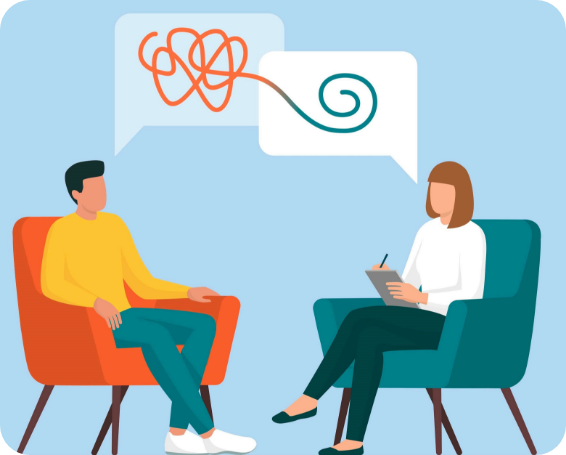
There is a stigma unique to mental health that is not present in other areas of health. A helpful exercise to highlight this is to ask yourself whether you would feel comfortable telling your friends and family that you’re seeing a doctor or dentist. Now be honest: would this feeling change if you were telling them you’re seeing a therapist instead? For lots of men, the answer is yes; the stigma associated with mental health problems and the vulnerability one feels about seeking support makes it harder for men to open up about these issues.
Pervasive social misconceptions that vulnerability is a weakness, or that depression makes you a burden, create an environment where men are less likely to engage in help-seeking behaviours. Society needs to grow to a place where seeing a therapist is no different from seeing any other healthcare professional, but how do we get there?
Most men will experience a mental health issue (up to 77% when surveyed by the Priory Group).17 Normalising mental health problems will make it easier for men to open up and seek support. And the good news is it’s not that hard to do!
Campaigns like Movember use public figures to help raise awareness, which improves the recognition, management, and prevention of mental health issues. Signposting is another critical step: providing easily obtainable resources to access professional support can make it easier for men to understand their issues and know where to go to get help.15
Ultimately, we need a dynamic framework to tackle the root causes of mental health issues in men, and to break down the barriers that make it harder for men to reach out for support.
If you are experiencing a mental health issue, understand that you are not alone and it’s okay to reach out for help. It does not make you weak nor does it make you a burden. You may find it uncomfortable to share your feelings but it’s a necessary step to overcome the difficulties you are experiencing. Remember, several mental health specialists will have seen many patients with similar problems as you.
We have built a forum dedicated to supporting men with their health issues, including mental health. Our forum offers a safe space to share your experiences, support other members who have similar issues, as well as share resources and build knowledge. You can join the TRTed forum (community) here
If you’re struggling with your mental health, you may find these resources helpful:
In the Western world, men are approximately three times more likely to take their own lives than women.1 This sobering statistic has driven global campaigns to raise awareness of mental health issues in men.
Despite higher suicide rates in men, research suggests it’s women who suffer more from mental health issues like depression, stress, and anxiety, all common risk factors for suicide.2–4 These contrasting observations may not tell the complete story, however, since men are less likely to report and seek help for mental health issues.4 When men do report depression, it is also more likely to be severe compared to women.5 It is therefore possible that under-reporting issues grossly underestimate the true rates of mental health problems in men.
Another issue is that men are more likely to be misdiagnosed.6,7 Symptoms of depression are different in males and do not always align with how depression is commonly diagnosed in clinical settings.8,9 For example, a common diagnostic tool (Diagnostic and Statistical Manual of Mental Disorders) does not consider for how men tend to project their mental struggles, such as drinking alcohol and becoming irritable and aggressive.10–12
Tackling what is often referred to as a mental health crisis in men is no straightforward task.13 A dynamic framework to address the number of prevailing barriers in men’s patient care journey is required. Possibly the largest obstacle is that men are less likely to report their mental struggles and engage in help-seeking behaviours; compared to women, men in the UK are 58% less likely to receive mental health treatment. This remains true even after accounting for differences in the prevalence of mental health issues between men and women.14
To identify why men are less likely to engage in help-seeking behaviours for mental health issues, The National Institute of Health analysed nine different studies exploring this issue.15 They identified a few consistent themes that might explain why this is happening:
Men tend to confine themselves to their traditional gender role of masculinity. They evoke a sense of responsibility to uphold traits of stoicism, invulnerability, and self-reliance, all of which are incompatible with psychological help-seeking.15 According to research from the American Psychological Association, men who project more stereotypically masculine behaviours have worse mental health outcomes than men who do not exhibit the same behaviours as strongly.16 While such traits can help overcome challenges, they can also reduce the likelihood of reaching out for help when it’s truly needed.
The need to uphold traditional masculine traits can lead to unique projections of mental health symptoms when problems arise. Self-reliance can lead to self-medication through unhealthy means like alcohol, drug, workaholism, and more romantic partners.15
There is a stigma unique to mental health that is not present in other areas of health. A helpful exercise to highlight this is to ask yourself whether you would feel comfortable telling your friends and family that you’re seeing a doctor or dentist. Now be honest: would this feeling change if you were telling them you’re seeing a therapist instead? For lots of men, the answer is yes; the stigma associated with mental health problems and the vulnerability one feels about seeking support makes it harder for men to open up about these issues.
Pervasive social misconceptions that vulnerability is a weakness, or that depression makes you a burden, create an environment where men are less likely to engage in help-seeking behaviours. Society needs to grow to a place where seeing a therapist is no different from seeing any other healthcare professional, but how do we get there?
Most men will experience a mental health issue (up to 77% when surveyed by the Priory Group).17 Normalising mental health problems will make it easier for men to open up and seek support. And the good news is it’s not that hard to do!
Campaigns like Movember use public figures to help raise awareness, which improves the recognition, management, and prevention of mental health issues. Signposting is another critical step: providing easily obtainable resources to access professional support can make it easier for men to understand their issues and know where to go to get help.15
Ultimately, we need a dynamic framework to tackle the root causes of mental health issues in men, and to break down the barriers that make it harder for men to reach out for support.
If you are experiencing a mental health issue, understand that you are not alone and it’s okay to reach out for help. It does not make you weak nor does it make you a burden. You may find it uncomfortable to share your feelings but it’s a necessary step to overcome the difficulties you are experiencing. Remember, several mental health specialists will have seen many patients with similar problems as you.
We have built a forum dedicated to supporting men with their health issues, including mental health. Our forum offers a safe space to share your experiences, support other members who have similar issues, as well as share resources and build knowledge. You can join the TRTed forum (community) here
If you’re struggling with your mental health, you may find these resources helpful:
References: 1. Chang Q, et al. Journal of Affective Disorders 2019;243:297–304. 2. Albert PR. J Psychiatry Neurosci 2015;40(4):219–221.
3. American Psychological Association: Stress in America: Available at https://www.apa.org/news/press/releases/stress/2010/gender-stress.pdf. Date accessed: November 2022. 4. McLean CP, et al. Journal of Psychiatric Research 2011;45(8) 1027–1035. 5. Hajduk A, et al. Ann Acad Med Stetin 2011;57:45–8. 6. Cochran S.V, et al. Professional Psychology: Research and Practice 2003;34(2),132–140. 7. Kerr L. K, et al. Western Journal of Medicine 2001;175(5):349–352. 8. Addis M. E. Clinical Psychology: Science and Practice 2008;15(3):153–168. 9. American Psychiatric Association. Diagnostic and statistical manual of mental disorders 2015;Arlington, VA: American Psychiatric Publishing. 10. Angst J, et al. European Archives of Psychiatry and Clinical Neuroscience 2002;252(5):201–209. 11. Rice S. M. International Journal of Social Psychiatry 2015;61(3):236–240. . American Psychiatric Association. Diagnostic and statistical manual of mental disorders (5th ed.) 2013. Arlington, VA: American Psychiatric Publishing. 13. Porsche D, et al. Am J Mens Health 2020;14(4):1557988320936504. 14. McManus S, et al. Mental health and wellbeing in England: Adult Psychiatric Morbidity Survey 2014 2016;Leeds: NHS Digital. 15. Sagar-Ouriaghli, et al. Am J Mens Health 2019;13(3):1557988319857009. 16. Wong JY, et al. Journal of Counseling Psychology 2017;64(1):80–93. 17. Priory Group (Mental Health Statistics). Available at: https://www.priorygroup.com/blog/40-of-men-wont-talk-to-anyone-about-their-mental-health. Date accessed: November 2022.
In the Western world, men are approximately three times more likely to take their own lives than women.1 This sobering statistic has driven global campaigns to raise awareness of mental health issues in men.
Despite higher suicide rates in men, research suggests it’s women who suffer more from mental health issues like depression, stress, and anxiety, all common risk factors for suicide.2–4 These contrasting observations may not tell the complete story, however, since men are less likely to report and seek help for mental health issues.4 When men do report depression, it is also more likely to be severe compared to women.5 It is therefore possible that under-reporting issues grossly underestimate the true rates of mental health problems in men.
Another issue is that men are more likely to be misdiagnosed.6,7 Symptoms of depression are different in males and do not always align with how depression is commonly diagnosed in clinical settings.8,9 For example, a common diagnostic tool (Diagnostic and Statistical Manual of Mental Disorders) does not consider for how men tend to project their mental struggles, such as drinking alcohol and becoming irritable and aggressive.10–12
Tackling what is often referred to as a mental health crisis in men is no straightforward task.13 A dynamic framework to address the number of prevailing barriers in men’s patient care journey is required. Possibly the largest obstacle is that men are less likely to report their mental struggles and engage in help-seeking behaviours; compared to women, men in the UK are 58% less likely to receive mental health treatment. This remains true even after accounting for differences in the prevalence of mental health issues between men and women.14
To identify why men are less likely to engage in help-seeking behaviours for mental health issues, The National Institute of Health analysed nine different studies exploring this issue.15 They identified a few consistent themes that might explain why this is happening:
Men tend to confine themselves to their traditional gender role of masculinity. They evoke a sense of responsibility to uphold traits of stoicism, invulnerability, and self-reliance, all of which are incompatible with psychological help-seeking.15 According to research from the American Psychological Association, men who project more stereotypically masculine behaviours have worse mental health outcomes than men who do not exhibit the same behaviours as strongly.16 While such traits can help overcome challenges, they can also reduce the likelihood of reaching out for help when it’s truly needed.
The need to uphold traditional masculine traits can lead to unique projections of mental health symptoms when problems arise. Self-reliance can lead to self-medication through unhealthy means like alcohol, drug, workaholism, and more romantic partners.15
There is a stigma unique to mental health that is not present in other areas of health. A helpful exercise to highlight this is to ask yourself whether you would feel comfortable telling your friends and family that you’re seeing a doctor or dentist. Now be honest: would this feeling change if you were telling them you’re seeing a therapist instead? For lots of men, the answer is yes; the stigma associated with mental health problems and the vulnerability one feels about seeking support makes it harder for men to open up about these issues.
Pervasive social misconceptions that vulnerability is a weakness, or that depression makes you a burden, create an environment where men are less likely to engage in help-seeking behaviours. Society needs to grow to a place where seeing a therapist is no different from seeing any other healthcare professional, but how do we get there?
Most men will experience a mental health issue (up to 77% when surveyed by the Priory Group).17 Normalising mental health problems will make it easier for men to open up and seek support. And the good news is it’s not that hard to do!
Campaigns like Movember use public figures to help raise awareness, which improves the recognition, management, and prevention of mental health issues. Signposting is another critical step: providing easily obtainable resources to access professional support can make it easier for men to understand their issues and know where to go to get help.15
Ultimately, we need a dynamic framework to tackle the root causes of mental health issues in men, and to break down the barriers that make it harder for men to reach out for support.
If you are experiencing a mental health issue, understand that you are not alone and it’s okay to reach out for help. It does not make you weak nor does it make you a burden. You may find it uncomfortable to share your feelings but it’s a necessary step to overcome the difficulties you are experiencing. Remember, several mental health specialists will have seen many patients with similar problems as you.
We have built a forum dedicated to supporting men with their health issues, including mental health. Our forum offers a safe space to share your experiences, support other members who have similar issues, as well as share resources and build knowledge. You can join the TRTed forum (community) here
If you’re struggling with your mental health, you may find these resources helpful:
References: 1. Chang Q, et al. Journal of Affective Disorders 2019;243:297–304. 2. Albert PR. J Psychiatry Neurosci 2015;40(4):219–221.
3. American Psychological Association: Stress in America: Available at https://www.apa.org/news/press/releases/stress/2010/gender-stress.pdf. Date accessed: November 2022. 4. McLean CP, et al. Journal of Psychiatric Research 2011;45(8) 1027–1035. 5. Hajduk A, et al. Ann Acad Med Stetin 2011;57:45–8. 6. Cochran S.V, et al. Professional Psychology: Research and Practice 2003;34(2),132–140. 7. Kerr L. K, et al. Western Journal of Medicine 2001;175(5):349–352. 8. Addis M. E. Clinical Psychology: Science and Practice 2008;15(3):153–168. 9. American Psychiatric Association. Diagnostic and statistical manual of mental disorders 2015;Arlington, VA: American Psychiatric Publishing. 10. Angst J, et al. European Archives of Psychiatry and Clinical Neuroscience 2002;252(5):201–209. 11. Rice S. M. International Journal of Social Psychiatry 2015;61(3):236–240. . American Psychiatric Association. Diagnostic and statistical manual of mental disorders (5th ed.) 2013. Arlington, VA: American Psychiatric Publishing. 13. Porsche D, et al. Am J Mens Health 2020;14(4):1557988320936504. 14. McManus S, et al. Mental health and wellbeing in England: Adult Psychiatric Morbidity Survey 2014 2016;Leeds: NHS Digital. 15. Sagar-Ouriaghli, et al. Am J Mens Health 2019;13(3):1557988319857009. 16. Wong JY, et al. Journal of Counseling Psychology 2017;64(1):80–93. 17. Priory Group (Mental Health Statistics). Available at: https://www.priorygroup.com/blog/40-of-men-wont-talk-to-anyone-about-their-mental-health. Date accessed: November 2022.
In the Western world, men are approximately three times more likely to take their own lives than women.1 This sobering statistic has driven global campaigns to raise awareness of mental health issues in men.
Despite higher suicide rates in men, research suggests it’s women who suffer more from mental health issues like depression, stress, and anxiety, all common risk factors for suicide.2–4 These contrasting observations may not tell the complete story, however, since men are less likely to report and seek help for mental health issues.4 When men do report depression, it is also more likely to be severe compared to women.5 It is therefore possible that under-reporting issues grossly underestimate the true rates of mental health problems in men.
Another issue is that men are more likely to be misdiagnosed.6,7 Symptoms of depression are different in males and do not always align with how depression is commonly diagnosed in clinical settings.8,9 For example, a common diagnostic tool (Diagnostic and Statistical Manual of Mental Disorders) does not consider for how men tend to project their mental struggles, such as drinking alcohol and becoming irritable and aggressive.10–12
Tackling what is often referred to as a mental health crisis in men is no straightforward task.13 A dynamic framework to address the number of prevailing barriers in men’s patient care journey is required. Possibly the largest obstacle is that men are less likely to report their mental struggles and engage in help-seeking behaviours; compared to women, men in the UK are 58% less likely to receive mental health treatment. This remains true even after accounting for differences in the prevalence of mental health issues between men and women.14
To identify why men are less likely to engage in help-seeking behaviours for mental health issues, The National Institute of Health analysed nine different studies exploring this issue.15 They identified a few consistent themes that might explain why this is happening:
Men tend to confine themselves to their traditional gender role of masculinity. They evoke a sense of responsibility to uphold traits of stoicism, invulnerability, and self-reliance, all of which are incompatible with psychological help-seeking.15 According to research from the American Psychological Association, men who project more stereotypically masculine behaviours have worse mental health outcomes than men who do not exhibit the same behaviours as strongly.16 While such traits can help overcome challenges, they can also reduce the likelihood of reaching out for help when it’s truly needed.
The need to uphold traditional masculine traits can lead to unique projections of mental health symptoms when problems arise. Self-reliance can lead to self-medication through unhealthy means like alcohol, drug, workaholism, and more romantic partners.15
There is a stigma unique to mental health that is not present in other areas of health. A helpful exercise to highlight this is to ask yourself whether you would feel comfortable telling your friends and family that you’re seeing a doctor or dentist. Now be honest: would this feeling change if you were telling them you’re seeing a therapist instead? For lots of men, the answer is yes; the stigma associated with mental health problems and the vulnerability one feels about seeking support makes it harder for men to open up about these issues.
Pervasive social misconceptions that vulnerability is a weakness, or that depression makes you a burden, create an environment where men are less likely to engage in help-seeking behaviours. Society needs to grow to a place where seeing a therapist is no different from seeing any other healthcare professional, but how do we get there?
Most men will experience a mental health issue (up to 77% when surveyed by the Priory Group).17 Normalising mental health problems will make it easier for men to open up and seek support. And the good news is it’s not that hard to do!
Campaigns like Movember use public figures to help raise awareness, which improves the recognition, management, and prevention of mental health issues. Signposting is another critical step: providing easily obtainable resources to access professional support can make it easier for men to understand their issues and know where to go to get help.15
Ultimately, we need a dynamic framework to tackle the root causes of mental health issues in men, and to break down the barriers that make it harder for men to reach out for support.
If you are experiencing a mental health issue, understand that you are not alone and it’s okay to reach out for help. It does not make you weak nor does it make you a burden. You may find it uncomfortable to share your feelings but it’s a necessary step to overcome the difficulties you are experiencing. Remember, several mental health specialists will have seen many patients with similar problems as you.
We have built a forum dedicated to supporting men with their health issues, including mental health. Our forum offers a safe space to share your experiences, support other members who have similar issues, as well as share resources and build knowledge. You can join the TRTed forum (community) here
If you’re struggling with your mental health, you may find these resources helpful:
References: 1. Chang Q, et al. Journal of Affective Disorders 2019;243:297–304. 2. Albert PR. J Psychiatry Neurosci 2015;40(4):219–221.
3. American Psychological Association: Stress in America: Available at https://www.apa.org/news/press/releases/stress/2010/gender-stress.pdf. Date accessed: November 2022. 4. McLean CP, et al. Journal of Psychiatric Research 2011;45(8) 1027–1035. 5. Hajduk A, et al. Ann Acad Med Stetin 2011;57:45–8. 6. Cochran S.V, et al. Professional Psychology: Research and Practice 2003;34(2),132–140. 7. Kerr L. K, et al. Western Journal of Medicine 2001;175(5):349–352. 8. Addis M. E. Clinical Psychology: Science and Practice 2008;15(3):153–168. 9. American Psychiatric Association. Diagnostic and statistical manual of mental disorders 2015;Arlington, VA: American Psychiatric Publishing. 10. Angst J, et al. European Archives of Psychiatry and Clinical Neuroscience 2002;252(5):201–209. 11. Rice S. M. International Journal of Social Psychiatry 2015;61(3):236–240. . American Psychiatric Association. Diagnostic and statistical manual of mental disorders (5th ed.) 2013. Arlington, VA: American Psychiatric Publishing. 13. Porsche D, et al. Am J Mens Health 2020;14(4):1557988320936504. 14. McManus S, et al. Mental health and wellbeing in England: Adult Psychiatric Morbidity Survey 2014 2016;Leeds: NHS Digital. 15. Sagar-Ouriaghli, et al. Am J Mens Health 2019;13(3):1557988319857009. 16. Wong JY, et al. Journal of Counseling Psychology 2017;64(1):80–93. 17. Priory Group (Mental Health Statistics). Available at: https://www.priorygroup.com/blog/40-of-men-wont-talk-to-anyone-about-their-mental-health. Date accessed: November 2022.
In the Western world, men are approximately three times more likely to take their own lives than women.1 This sobering statistic has driven global campaigns to raise awareness of mental health issues in men.
Despite higher suicide rates in men, research suggests it’s women who suffer more from mental health issues like depression, stress, and anxiety, all common risk factors for suicide.2–4 These contrasting observations may not tell the complete story, however, since men are less likely to report and seek help for mental health issues.4 When men do report depression, it is also more likely to be severe compared to women.5 It is therefore possible that under-reporting issues grossly underestimate the true rates of mental health problems in men.
Another issue is that men are more likely to be misdiagnosed.6,7 Symptoms of depression are different in males and do not always align with how depression is commonly diagnosed in clinical settings.8,9 For example, a common diagnostic tool (Diagnostic and Statistical Manual of Mental Disorders) does not consider for how men tend to project their mental struggles, such as drinking alcohol and becoming irritable and aggressive.10–12
Tackling what is often referred to as a mental health crisis in men is no straightforward task.13 A dynamic framework to address the number of prevailing barriers in men’s patient care journey is required. Possibly the largest obstacle is that men are less likely to report their mental struggles and engage in help-seeking behaviours; compared to women, men in the UK are 58% less likely to receive mental health treatment. This remains true even after accounting for differences in the prevalence of mental health issues between men and women.14
To identify why men are less likely to engage in help-seeking behaviours for mental health issues, The National Institute of Health analysed nine different studies exploring this issue.15 They identified a few consistent themes that might explain why this is happening:
Men tend to confine themselves to their traditional gender role of masculinity. They evoke a sense of responsibility to uphold traits of stoicism, invulnerability, and self-reliance, all of which are incompatible with psychological help-seeking.15 According to research from the American Psychological Association, men who project more stereotypically masculine behaviours have worse mental health outcomes than men who do not exhibit the same behaviours as strongly.16 While such traits can help overcome challenges, they can also reduce the likelihood of reaching out for help when it’s truly needed.
The need to uphold traditional masculine traits can lead to unique projections of mental health symptoms when problems arise. Self-reliance can lead to self-medication through unhealthy means like alcohol, drug, workaholism, and more romantic partners.15
There is a stigma unique to mental health that is not present in other areas of health. A helpful exercise to highlight this is to ask yourself whether you would feel comfortable telling your friends and family that you’re seeing a doctor or dentist. Now be honest: would this feeling change if you were telling them you’re seeing a therapist instead? For lots of men, the answer is yes; the stigma associated with mental health problems and the vulnerability one feels about seeking support makes it harder for men to open up about these issues.
Pervasive social misconceptions that vulnerability is a weakness, or that depression makes you a burden, create an environment where men are less likely to engage in help-seeking behaviours. Society needs to grow to a place where seeing a therapist is no different from seeing any other healthcare professional, but how do we get there?
Most men will experience a mental health issue (up to 77% when surveyed by the Priory Group).17 Normalising mental health problems will make it easier for men to open up and seek support. And the good news is it’s not that hard to do!
Campaigns like Movember use public figures to help raise awareness, which improves the recognition, management, and prevention of mental health issues. Signposting is another critical step: providing easily obtainable resources to access professional support can make it easier for men to understand their issues and know where to go to get help.15
Ultimately, we need a dynamic framework to tackle the root causes of mental health issues in men, and to break down the barriers that make it harder for men to reach out for support.
If you are experiencing a mental health issue, understand that you are not alone and it’s okay to reach out for help. It does not make you weak nor does it make you a burden. You may find it uncomfortable to share your feelings but it’s a necessary step to overcome the difficulties you are experiencing. Remember, several mental health specialists will have seen many patients with similar problems as you.
We have built a forum dedicated to supporting men with their health issues, including mental health. Our forum offers a safe space to share your experiences, support other members who have similar issues, as well as share resources and build knowledge. You can join the TRTed forum (community) here
If you’re struggling with your mental health, you may find these resources helpful: